zhenyang

Hi Oxide hiring team,
I’m zhenyang, a product designer with 12+ years of experience across enterprise software, cloud infrastructure and consumer products.
I am applying for the UI Designer role at Oxide because it sits at the exact intersection where I have done my strongest work: complex infrastructure software, startup-level ownership, systems-minded UI craft, and remote working experience.
Most recently at SmartX (a top-tier company of hyper-converged products and enterprise cloud solutions in China), I designed for HCI and enterprise cloud products used by technical operators, covering backup and disaster recovery(DR), distributed file storage, virtualization, distributed resource scheduler(DRS), snapshot planning, data encryption, and SmartX’s partners portal, etc.
I believe I would be a great match for this UI Designer role due to the following strengths:
Cloud infrastructure design experience
Over 5 years of design experience in HCI and enterprise cloud products. Leading the design work for disaster recovery, distributed file storage, DRS and other virtualization-related features at SmartX.
Full-stack design skills
UI&UX design, design research, product management, building and maintaining design systems, landing page design, website development, brand design, motion design, etc.
Systems thinking
Built and maintained design system, including reusable components, patterns, UI maps, and users’ guidance for design and dev teams.
Remote collaboration
6 years of remote work across distributed teams and can collaborate effectively across time zones and functions. I’m comfortable collaborating with engineers.
Startup ownership
I enjoy working in fast-paced startups where I can unleash my potential, take on more responsibilities, and proactively drive projects forward.
Technical-user mindset
Experienced designing products for technical users and operators. Familiar with code. Launched several side projects before.

Skills & Tools
Skills
Tools
Figma
Of course.
AI coding/designing tools
Codex, Claude Code, Openclaw, Figma Make, Lovart...
Framer
Paper
Still testing, sometimes used in the IDE
Unicorn
Creating interactive background for landing pages
My resume →

Work
SmartX Backup & Disaster Recovery
Research and design asynchronous replication feature from scratch. How I design a product in a completely new domain—from knowing nothing about the concept to delivering a complete solution.
Read more →
Maptable
A no-code tool that allows users to collect, organize, visualize and analyze spatial data. Users can collaborate in real-time.
Read more →
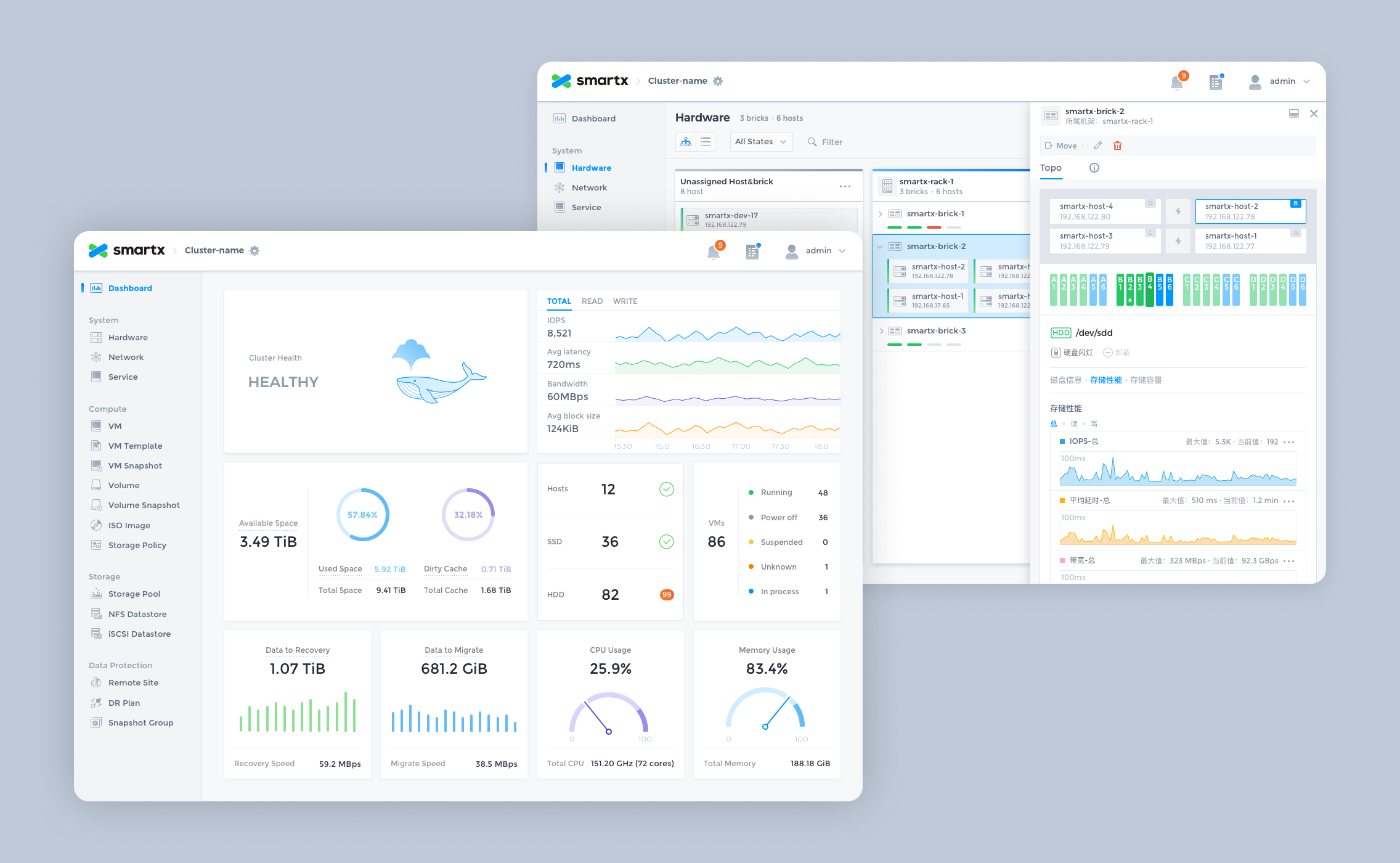
SMTX OS Redesign
Redesign a data-heavy enterprise product and build a design language.
Read more →
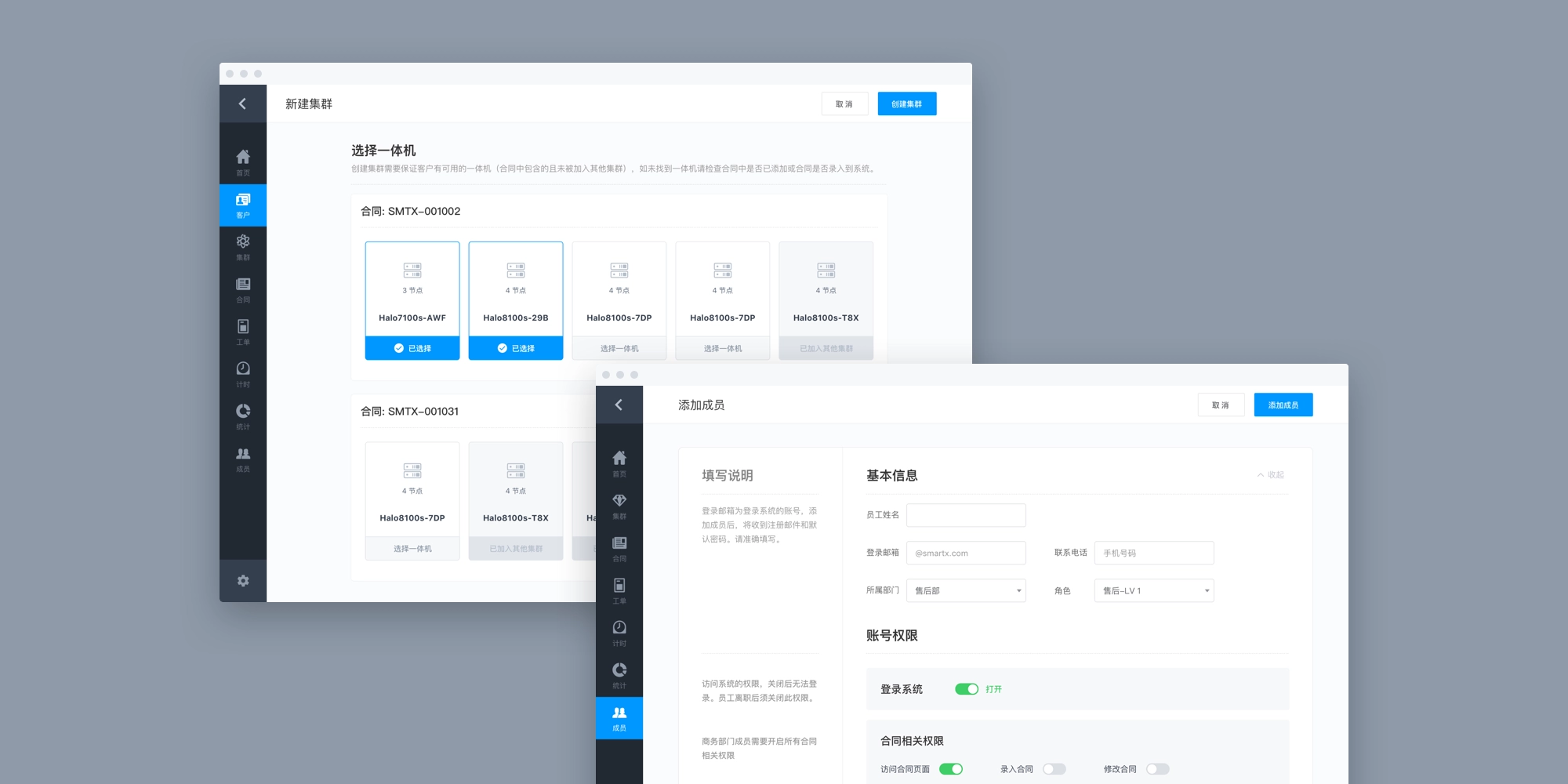
SmartX After-sales System
How to design a system with a large amount of data, complex permissions, and multiple departments involved.
Read more →
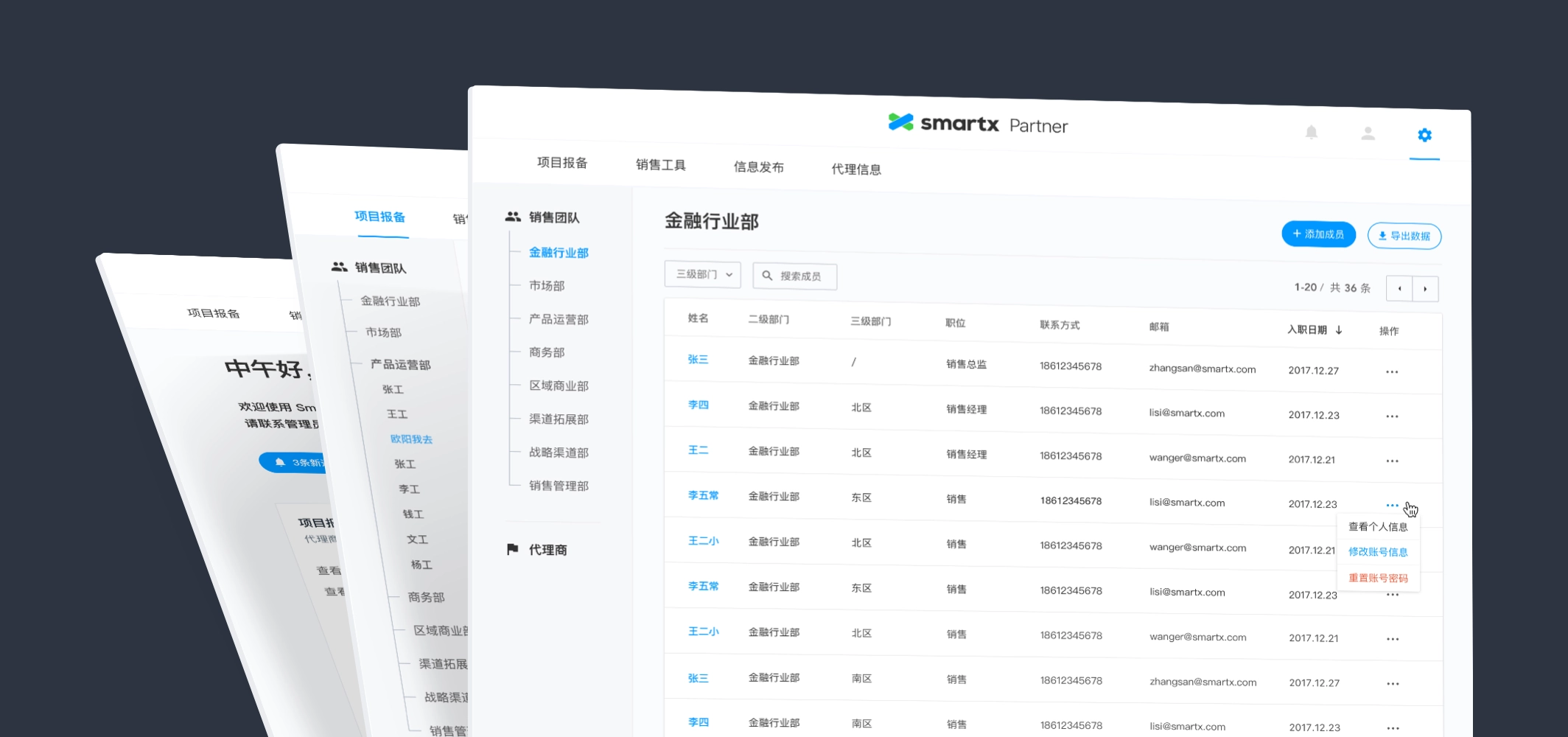
SmartX Partner Portal
A web application built for the sales team at SmartX and their partners.
Read more →

Check out my full portfolio →
Writing
Resource Selector Component Spec
Component documentation that I create and maintain for the SmartX design system.

TimePicker Component Spec
Another component documentation.
Design Research on Badge Design
A design research I made about badge design.
What is design?
A post I wrote earlier on my blog. Original post was written in Chinese, please use a translation tool to view.
How to manage design files?
Another post on my blog. Original post was written in Chinese.
What truly motivates you at work?
Another post on my blog. Original post was written in Chinese.
Presentation
Zhenyang’s 2022 Retrospect
I tried a newspaper-style design to summarize my work in 2022.
Zhenyang’s 2023 Retrospect
I used Framer to create a website with movable canvas to summarize my work in 2023.
What are AI Agents?
I gave a presentation on the theme of "AI Agent" to my design team members.
Q&A
What work have you found most technically challenging in your career and why?
The most technically challenging moment was when I first took over the backup and disaster recovery product line at SmartX.
When the product manager sent me a requirements document filled with over 40 pages of jargon, I didn't know where to start. On one hand, I know little about backup and disaster recovery features, and on the other hand, the complexity of backup and replication features was quite high.
After reviewing the PRD, I still didn't fully understand the requirements for "asynchronous replication," so I started with research. I discussed the actual needs of our clients and the problems they wanted to solve with the product manager, engineers, and sales. At the same time, I started researching similar products in the market, reading their documentation, and using their demos. Gradually, I understood the requirements, and more importantly, I knew what problems our clients wanted to solve.
Then I began the cycle: making prototypes → discuss for feedback with team members → modifying the prototype, ultimately I addressed the final design, and started the UI design and wrote UI specs.
What work have you done that you were particularly proud of and why?
While designing MapTable, as the only designer in the team without a product manager, I took on the entire process of product research, defining the product direction, writing PRD, concept design, prototyping, UI design, collecting user feedback, adapting for mobile, and iterative optimization, ultimately we launched the product.
The reason is that I prefer the atmosphere of working at a startup, where everyone can take on more responsibility, and we all work together towards a goal. I can do anything wherever the team needs me, and during this process also stimulates my potential and pushes me to learn more. I enjoy the feeling of growing quickly with the team, even though many times startups end in failure; but the experience is always unforgettable.
When have you been happiest in your professional career and why?
- When my design studio launched our product JournalFlow and we received the first payment from a customer.
- When I was working at SmartX, clients praised our design for its excellent user experience.
- When a colleague lfet the company, he told me that I was the best designer he had ever worked with.
I think it's because my work has been recognized. Being recognized always makes people happy : )
When have you been unhappiest in your professional career and why?
When I transitioned from a product manager to a designer, there was an instance where I missed an corner case in the UI design I delivered. It went unnoticed during testing but was encountered by our users. This has caused our entire team to work overtime to revise the issues, and I felt terrible about it.
I feel sorry about causing trouble for my team members, since then, I have made it a point to double-check every design detail I deliver.
For one of Oxide's values, describe an example of how it was reflected in a particular body of your work.
Rigor.
While working at SmartX, since we design professional enterprise products, our output also needs to maintain professionalism. Therefore, we have established strict guidelines, such as copywriting guidelines, translation guidelines, and we need to clearly define the handling of various exceptional and corner cases in the UI specs, considering as many situations that users might encounter as possible.
For one of Oxide's values, describe an example of how it was violated in your organization or work.
Transparency.
While still working at SmartX, we were already a medium-sized company (over 400 people) , yet we still used an inefficient waterfall communication method. Where the CEO and project owner would communicated first, then passed the requirements to designers. This process led to a lot of time-wasting and misunderstandings.
So after designing 2 days for the logo of SmartX’s new brand "Sunmao Enterprise Cloud", I was told that we actually didn't need a logo, I realized maybe it’s time to leave. This is also why I prefer startups that allow for efficient communication and collaboration.
For a pair of Oxide's values, describe a time in which the two values came into tension for you or your work, and how you resolved it.
During the development of the Maptable project, we encountered conflicts between Teamwork and Urgency. At that time, we were just a small team of fewer than 10 people, but we wanted to create a "perfect" product, trying to add as much features as possible. As a result, after a year into the project, we still hadn't launched the product. We were still optimizing and adding features. Based on the situation, I didn't know when we would actually deliver the product to users and gather feedback from them. I felt that the features we were planning were based on our own assumptions, and we needed to get users onboarding the product quickly to validate those assumptions.
So, I came up with this issue in a team standup meeting, let every team members to discuss the necessity of continuing to refine the product. Everyone agreed to stop adding features and launch as soon as possible (everyone is also feeling exhausted about the delayed launch of a product.). Then I prioritized all the unfinished features, focusing on core features and bug fixes, while scheduling lower-priority features for the next version (later realizing that some features were not of interest to users). We finally shipped the product within a month.
As I wrote in the “Things I learned” section in the Case Study:
Create something small to start with
When thinking about a very big project, you are sure to make a lot of assumptions, which means you have a lot of possibilities to be wrong. The smaller the point you start from, the higher the likelihood of getting it right.
Fail fast and learn fast
The MVP and alpha versions actually had the basic features, but we kept "pursuing perfection" to launch a better version, but the "better" version should come from customer feedback, not from our assumptions.
Why do you want to work for Oxide? Why do you want to work in this role at Oxide?
Why do I want to work for Oxide?
Oxide is a unique company in the industry, innovating in business models, internal communication, recruitment, and compensation, which greatly attracts me. Additionally, I enjoy the fast-paced environment of a startup where I can unleash my full potential. I also strongly align with Oxide’s way of working.
Remote work is my ideal lifestyle. I have been working remotely for the past six years and have become proficient in asynchronous communication skills. I have collaborated with distributed teams across time zones, and also served overseas clients on SaaS and AI products.
I understand that Oxide requires at least four hours of overlap with Pacific Time during workdays. Currently I’m based in Yunnan, China. But I can adjust my working hours to meet this requirement.
Why do I want to work in this role at Oxide?
As a designer, I have always loved Oxide's design, the dark UI design, landing page design and motion design are both very cool. I have saved lots of Oxide screenshot into my Eagle library. When I was at SmartX, I also used Oxide's UI as inspiration while designing the VI for SmartX's new brand "SunMao Enterprise Cloud" .
I love designing enterprise products, though it might be boring to some designers. Since most of the time is spent creating resource lists, researching statuses, handling CRUD, managing exceptions, and so on. However, for me, this job requires strong logical skills and a system perspective. I need to consider the collaboration between software and hardware, anticipate various situations that users may meet, and provide fault-tolerant solutions for potential user issues. Transforming complex and difficult requirements into simple and user-friendly interfaces gives me a great sense of accomplishment.
Additionally, I believe that Oxide needs an experienced designer as the second UI designer on the team. Designing cloud infrastructure software requires a high entry barrier, I think my 5 years of design experience in this field would allow me to quickly adapt and help the team create better products.

Thanks for reading! Have a good day!
zhenyang

Hi Oxide hiring team,
I’m zhenyang, a product designer with 12+ years of experience across enterprise software, cloud infrastructure and consumer products.
I am applying for the UI Designer role at Oxide because it sits at the exact intersection where I have done my strongest work: complex infrastructure software, startup-level ownership, systems-minded UI craft, and remote working experience.
Most recently at SmartX (a top-tier company of hyper-converged products and enterprise cloud solutions in China), I designed for HCI and enterprise cloud products used by technical operators, covering backup and disaster recovery(DR), distributed file storage, virtualization, distributed resource scheduler(DRS), snapshot planning, data encryption, and SmartX’s partners portal, etc.
I believe I would be a great match for this UI Designer role due to the following strengths:
Cloud infrastructure design experience
Over 5 years of design experience in HCI and enterprise cloud products. Leading the design work for disaster recovery, distributed file storage, DRS and other virtualization-related features at SmartX.
Full-stack design skills
UI&UX design, design research, product management, building and maintaining design systems, landing page design, website development, brand design, motion design, etc.
Systems thinking
Built and maintained design system, including reusable components, patterns, UI maps, and users’ guidance for design and dev teams.
Remote collaboration
6 years of remote work across distributed teams and can collaborate effectively across time zones and functions. I’m comfortable collaborating with engineers.
Startup ownership
I enjoy working in fast-paced startups where I can unleash my potential, take on more responsibilities, and proactively drive projects forward.
Technical-user mindset
Experienced designing products for technical users and operators. Familiar with code. Launched several side projects before.

Skills & Tools
Skills
Tools
Figma
Of course.
AI coding/designing tools
Codex, Claude Code, Openclaw, Figma Make, Lovart...
Framer
Paper
Still testing, sometimes used in the IDE
Unicorn
Creating interactive background for landing pages
My resume →

Work
SmartX Backup & Disaster Recovery
Research and design asynchronous replication feature from scratch. How I design a product in a completely new domain—from knowing nothing about the concept to delivering a complete solution.
Read more →
Maptable
A no-code tool that allows users to collect, organize, visualize and analyze spatial data. Users can collaborate in real-time.
Read more →
SMTX OS Redesign
Redesign a data-heavy enterprise product and build a design language.
Read more →
SmartX After-sales System
How to design a system with a large amount of data, complex permissions, and multiple departments involved.
Read more →
SmartX Partner Portal
A web application built for the sales team at SmartX and their partners.
Read more →

Check out my full portfolio →
Writing
Resource Selector Component Spec
Component documentation that I create and maintain for the SmartX design system.

TimePicker Component Spec
Another component documentation.
Design Research on Badge Design
A design research I made about badge design.
What is design?
A post I wrote earlier on my blog. Original post was written in Chinese, please use a translation tool to view.
How to manage design files?
Another post on my blog. Original post was written in Chinese.
What truly motivates you at work?
Another post on my blog. Original post was written in Chinese.
Presentation
Zhenyang’s 2022 Retrospect
I tried a newspaper-style design to summarize my work in 2022.
Zhenyang’s 2023 Retrospect
I used Framer to create a website with movable canvas to summarize my work in 2023.
What are AI Agents?
I gave a presentation on the theme of "AI Agent" to my design team members.
Q&A
What work have you found most technically challenging in your career and why?
The most technically challenging moment was when I first took over the backup and disaster recovery product line at SmartX.
When the product manager sent me a requirements document filled with over 40 pages of jargon, I didn't know where to start. On one hand, I know little about backup and disaster recovery features, and on the other hand, the complexity of backup and replication features was quite high.
After reviewing the PRD, I still didn't fully understand the requirements for "asynchronous replication," so I started with research. I discussed the actual needs of our clients and the problems they wanted to solve with the product manager, engineers, and sales. At the same time, I started researching similar products in the market, reading their documentation, and using their demos. Gradually, I understood the requirements, and more importantly, I knew what problems our clients wanted to solve.
Then I began the cycle: making prototypes → discuss for feedback with team members → modifying the prototype, ultimately I addressed the final design, and started the UI design and wrote UI specs.
What work have you done that you were particularly proud of and why?
While designing MapTable, as the only designer in the team without a product manager, I took on the entire process of product research, defining the product direction, writing PRD, concept design, prototyping, UI design, collecting user feedback, adapting for mobile, and iterative optimization, ultimately we launched the product.
The reason is that I prefer the atmosphere of working at a startup, where everyone can take on more responsibility, and we all work together towards a goal. I can do anything wherever the team needs me, and during this process also stimulates my potential and pushes me to learn more. I enjoy the feeling of growing quickly with the team, even though many times startups end in failure; but the experience is always unforgettable.
When have you been happiest in your professional career and why?
- When my design studio launched our product JournalFlow and we received the first payment from a customer.
- When I was working at SmartX, clients praised our design for its excellent user experience.
- When a colleague lfet the company, he told me that I was the best designer he had ever worked with.
I think it's because my work has been recognized. Being recognized always makes people happy : )
When have you been unhappiest in your professional career and why?
When I transitioned from a product manager to a designer, there was an instance where I missed an corner case in the UI design I delivered. It went unnoticed during testing but was encountered by our users. This has caused our entire team to work overtime to revise the issues, and I felt terrible about it.
I feel sorry about causing trouble for my team members, since then, I have made it a point to double-check every design detail I deliver.
For one of Oxide's values, describe an example of how it was reflected in a particular body of your work.
Rigor.
While working at SmartX, since we design professional enterprise products, our output also needs to maintain professionalism. Therefore, we have established strict guidelines, such as copywriting guidelines, translation guidelines, and we need to clearly define the handling of various exceptional and corner cases in the UI specs, considering as many situations that users might encounter as possible.
For one of Oxide's values, describe an example of how it was violated in your organization or work.
Transparency.
While still working at SmartX, we were already a medium-sized company (over 400 people) , yet we still used an inefficient waterfall communication method. Where the CEO and project owner would communicated first, then passed the requirements to designers. This process led to a lot of time-wasting and misunderstandings.
So after designing 2 days for the logo of SmartX’s new brand "Sunmao Enterprise Cloud", I was told that we actually didn't need a logo, I realized maybe it’s time to leave. This is also why I prefer startups that allow for efficient communication and collaboration.
For a pair of Oxide's values, describe a time in which the two values came into tension for you or your work, and how you resolved it.
During the development of the Maptable project, we encountered conflicts between Teamwork and Urgency. At that time, we were just a small team of fewer than 10 people, but we wanted to create a "perfect" product, trying to add as much features as possible. As a result, after a year into the project, we still hadn't launched the product. We were still optimizing and adding features. Based on the situation, I didn't know when we would actually deliver the product to users and gather feedback from them. I felt that the features we were planning were based on our own assumptions, and we needed to get users onboarding the product quickly to validate those assumptions.
So, I came up with this issue in a team standup meeting, let every team members to discuss the necessity of continuing to refine the product. Everyone agreed to stop adding features and launch as soon as possible (everyone is also feeling exhausted about the delayed launch of a product.). Then I prioritized all the unfinished features, focusing on core features and bug fixes, while scheduling lower-priority features for the next version (later realizing that some features were not of interest to users). We finally shipped the product within a month.
As I wrote in the “Things I learned” section in the Case Study:
Create something small to start with
When thinking about a very big project, you are sure to make a lot of assumptions, which means you have a lot of possibilities to be wrong. The smaller the point you start from, the higher the likelihood of getting it right.
Fail fast and learn fast
The MVP and alpha versions actually had the basic features, but we kept "pursuing perfection" to launch a better version, but the "better" version should come from customer feedback, not from our assumptions.
Why do you want to work for Oxide? Why do you want to work in this role at Oxide?
Why do I want to work for Oxide?
Oxide is a unique company in the industry, innovating in business models, internal communication, recruitment, and compensation, which greatly attracts me. Additionally, I enjoy the fast-paced environment of a startup where I can unleash my full potential. I also strongly align with Oxide’s way of working.
Remote work is my ideal lifestyle. I have been working remotely for the past six years and have become proficient in asynchronous communication skills. I have collaborated with distributed teams across time zones, and also served overseas clients on SaaS and AI products.
I understand that Oxide requires at least four hours of overlap with Pacific Time during workdays. Currently I’m based in Yunnan, China. But I can adjust my working hours to meet this requirement.
Why do I want to work in this role at Oxide?
As a designer, I have always loved Oxide's design, the dark UI design, landing page design and motion design are both very cool. I have saved lots of Oxide screenshot into my Eagle library. When I was at SmartX, I also used Oxide's UI as inspiration while designing the VI for SmartX's new brand "SunMao Enterprise Cloud" .
I love designing enterprise products, though it might be boring to some designers. Since most of the time is spent creating resource lists, researching statuses, handling CRUD, managing exceptions, and so on. However, for me, this job requires strong logical skills and a system perspective. I need to consider the collaboration between software and hardware, anticipate various situations that users may meet, and provide fault-tolerant solutions for potential user issues. Transforming complex and difficult requirements into simple and user-friendly interfaces gives me a great sense of accomplishment.
Additionally, I believe that Oxide needs an experienced designer as the second UI designer on the team. Designing cloud infrastructure software requires a high entry barrier, I think my 5 years of design experience in this field would allow me to quickly adapt and help the team create better products.

Thanks for reading! Have a good day!
zhenyang
Hi Oxide hiring team,
I’m zhenyang, a product designer with 12+ years of experience across enterprise software, cloud infrastructure and consumer products.
I am applying for the UI Designer role at Oxide because it sits at the exact intersection where I have done my strongest work: complex infrastructure software, startup-level ownership, systems-minded UI craft, and remote working experience.
Most recently at SmartX (a top-tier company of hyper-converged products and enterprise cloud solutions in China), I designed for HCI and enterprise cloud products used by technical operators, covering backup and disaster recovery(DR), distributed file storage, virtualization, distributed resource scheduler(DRS), snapshot planning, data encryption, and SmartX’s partners portal, etc.
I believe I would be a great match for this UI Designer role due to the following strengths:
Cloud infrastructure design experience
Over 5 years of design experience in HCI and enterprise cloud products. Leading the design work for disaster recovery, distributed file storage, DRS and other virtualization-related features at SmartX.
Full-stack design skills
UI&UX design, design research, product management, building and maintaining design systems, landing page design, website development, brand design, motion design, etc.
Systems thinking
Built and maintained design system, including reusable components, patterns, UI maps, and users’ guidance for design and dev teams.
Remote collaboration
6 years of remote work across distributed teams and can collaborate effectively across time zones and functions. I’m comfortable collaborating with engineers.
Startup ownership
I enjoy working in fast-paced startups where I can unleash my potential, take on more responsibilities, and proactively drive projects forward.
Technical-user mindset
Experienced designing products for technical users and operators. Familiar with code. Launched several side projects before.

Skills &
Tools
Skills
Tools
Figma
Of course.
AI coding/designing tools
Codex, Claude Code, Openclaw, Figma Make, Lovart...
Framer
Paper
Still testing, sometimes used in the IDE
Unicorn
Creating interactive background for landing pages
My resume →

Work
SmartX Backup & Disaster Recovery
Research and design asynchronous replication feature from scratch. How I design a product in a completely new domain—from knowing nothing about the concept to delivering a complete solution.
Read more →
Maptable
A no-code tool that allows users to collect, organize, visualize and analyze spatial data. Users can collaborate in real-time.
Read more →
SMTX OS Redesign
Redesign a data-heavy enterprise product and build a design language.
Read more →
SmartX After-sales System
How to design a system with a large amount of data, complex permissions, and multiple departments involved.
Read more →
SmartX Partner Portal
A web application built for the sales team at SmartX and their partners.
Read more →

Check out my full portfolio →
Writing
Resource Selector Component Spec
Component documentation that I create and maintain for the SmartX design system.

TimePicker Component Spec
Another component documentation.
Design Research on Badge Design
A design research I made about badge design.
What is design?
A post I wrote earlier on my blog. Original post was written in Chinese, please use a translation tool to view.
How to manage design files?
Another post on my blog. Original post was written in Chinese.
What truly motivates you at work?
Another post on my blog. Original post was written in Chinese.
Presentation
Zhenyang’s 2022 Retrospect
I tried a newspaper-style design to summarize my work in 2022.
Zhenyang’s 2023 Retrospect
I used Framer to create a website with movable canvas to summarize my work in 2023.
What are AI Agents?
I gave a presentation on the theme of "AI Agent" to my design team members.
Q&A
What work have you found most technically challenging in your career and why?
The most technically challenging moment was when I first took over the backup and disaster recovery product line at SmartX.
When the product manager sent me a requirements document filled with over 40 pages of jargon, I didn't know where to start. On one hand, I know little about backup and disaster recovery features, and on the other hand, the complexity of backup and replication features was quite high.
After reviewing the PRD, I still didn't fully understand the requirements for "asynchronous replication," so I started with research. I discussed the actual needs of our clients and the problems they wanted to solve with the product manager, engineers, and sales. At the same time, I started researching similar products in the market, reading their documentation, and using their demos. Gradually, I understood the requirements, and more importantly, I knew what problems our clients wanted to solve.
Then I began the cycle: making prototypes → discuss for feedback with team members → modifying the prototype, ultimately I addressed the final design, and started the UI design and wrote UI specs.
What work have you done that you were particularly proud of and why?
While designing MapTable, as the only designer in the team without a product manager, I took on the entire process of product research, defining the product direction, writing PRD, concept design, prototyping, UI design, collecting user feedback, adapting for mobile, and iterative optimization, ultimately we launched the product.
The reason is that I prefer the atmosphere of working at a startup, where everyone can take on more responsibility, and we all work together towards a goal. I can do anything wherever the team needs me, and during this process also stimulates my potential and pushes me to learn more. I enjoy the feeling of growing quickly with the team, even though many times startups end in failure; but the experience is always unforgettable.
When have you been happiest in your professional career and why?
- When my design studio launched our product JournalFlow and we received the first payment from a customer.
- When I was working at SmartX, clients praised our design for its excellent user experience.
- When a colleague lfet the company, he told me that I was the best designer he had ever worked with.
I think it's because my work has been recognized. Being recognized always makes people happy : )
When have you been unhappiest in your professional career and why?
When I transitioned from a product manager to a designer, there was an instance where I missed an corner case in the UI design I delivered. It went unnoticed during testing but was encountered by our users. This has caused our entire team to work overtime to revise the issues, and I felt terrible about it.
I feel sorry about causing trouble for my team members, since then, I have made it a point to double-check every design detail I deliver.
For one of Oxide's values, describe an example of how it was reflected in a particular body of your work.
Rigor.
While working at SmartX, since we design professional enterprise products, our output also needs to maintain professionalism. Therefore, we have established strict guidelines, such as copywriting guidelines, translation guidelines, and we need to clearly define the handling of various exceptional and corner cases in the UI specs, considering as many situations that users might encounter as possible.
For one of Oxide's values, describe an example of how it was violated in your organization or work.
Transparency.
While still working at SmartX, we were already a medium-sized company (over 400 people) , yet we still used an inefficient waterfall communication method. Where the CEO and project owner would communicated first, then passed the requirements to designers. This process led to a lot of time-wasting and misunderstandings.
So after designing 2 days for the logo of SmartX’s new brand "Sunmao Enterprise Cloud", I was told that we actually didn't need a logo, I realized maybe it’s time to leave. This is also why I prefer startups that allow for efficient communication and collaboration.
For a pair of Oxide's values, describe a time in which the two values came into tension for you or your work, and how you resolved it.
During the development of the Maptable project, we encountered conflicts between Teamwork and Urgency. At that time, we were just a small team of fewer than 10 people, but we wanted to create a "perfect" product, trying to add as much features as possible. As a result, after a year into the project, we still hadn't launched the product. We were still optimizing and adding features. Based on the situation, I didn't know when we would actually deliver the product to users and gather feedback from them. I felt that the features we were planning were based on our own assumptions, and we needed to get users onboarding the product quickly to validate those assumptions.
So, I came up with this issue in a team standup meeting, let every team members to discuss the necessity of continuing to refine the product. Everyone agreed to stop adding features and launch as soon as possible (everyone is also feeling exhausted about the delayed launch of a product.). Then I prioritized all the unfinished features, focusing on core features and bug fixes, while scheduling lower-priority features for the next version (later realizing that some features were not of interest to users). We finally shipped the product within a month.
As I wrote in the “Things I learned” section in the Case Study:
Create something small to start with
When thinking about a very big project, you are sure to make a lot of assumptions, which means you have a lot of possibilities to be wrong. The smaller the point you start from, the higher the likelihood of getting it right.
Fail fast and learn fast
The MVP and alpha versions actually had the basic features, but we kept "pursuing perfection" to launch a better version, but the "better" version should come from customer feedback, not from our assumptions.
Why do you want to work for Oxide? Why do you want to work in this role at Oxide?
Why do I want to work for Oxide?
Oxide is a unique company in the industry, innovating in business models, internal communication, recruitment, and compensation, which greatly attracts me. Additionally, I enjoy the fast-paced environment of a startup where I can unleash my full potential. I also strongly align with Oxide’s way of working.
Remote work is my ideal lifestyle. I have been working remotely for the past six years and have become proficient in asynchronous communication skills. I have collaborated with distributed teams across time zones, and also served overseas clients on SaaS and AI products.
I understand that Oxide requires at least four hours of overlap with Pacific Time during workdays. Currently I’m based in Yunnan, China. But I can adjust my working hours to meet this requirement.
Why do I want to work in this role at Oxide?
As a designer, I have always loved Oxide's design, the dark UI design, landing page design and motion design are both very cool. I have saved lots of Oxide screenshot into my Eagle library. When I was at SmartX, I also used Oxide's UI as inspiration while designing the VI for SmartX's new brand "SunMao Enterprise Cloud" .
I love designing enterprise products, though it might be boring to some designers. Since most of the time is spent creating resource lists, researching statuses, handling CRUD, managing exceptions, and so on. However, for me, this job requires strong logical skills and a system perspective. I need to consider the collaboration between software and hardware, anticipate various situations that users may meet, and provide fault-tolerant solutions for potential user issues. Transforming complex and difficult requirements into simple and user-friendly interfaces gives me a great sense of accomplishment.
Additionally, I believe that Oxide needs an experienced designer as the second UI designer on the team. Designing cloud infrastructure software requires a high entry barrier, I think my 5 years of design experience in this field would allow me to quickly adapt and help the team create better products.

Thanks for reading! Have a good day!